
WORSHIPPER
Why God Cares More About the Heart Than the Style

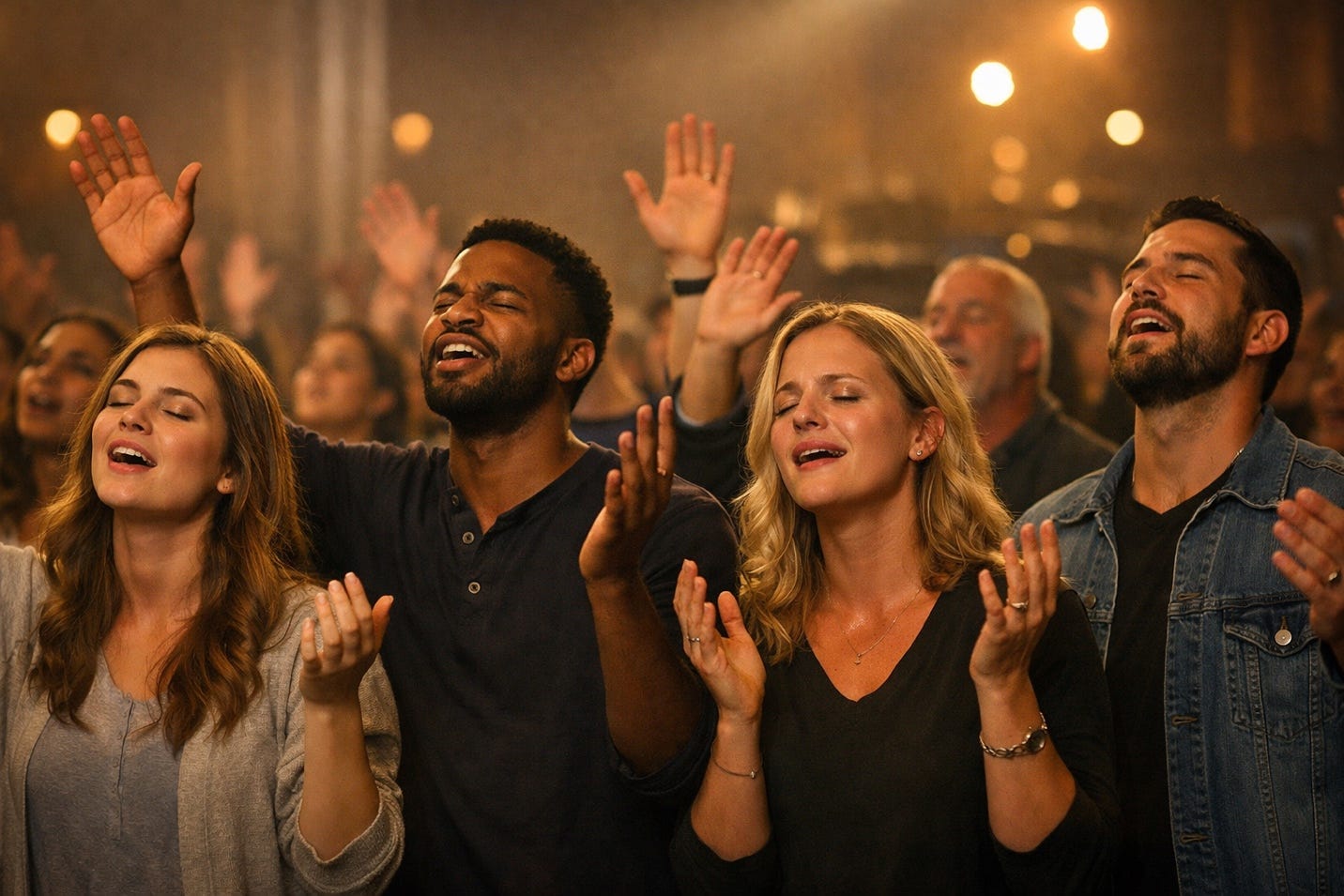
Over the last few weeks, I have written about the Believer, the Christian, and the Disciple. Each of these words carries weight, identity, and responsibility. But beneath belief, beyond confession, and deeper than obedience lies something even more intimate, the posture of the heart before God. This article turns our attention to the Worshipper, not merely what we do in a song or a service, but who we are when no one is watching. Worship reveals what truly holds first place in our lives, because long before worship is expressed with words, it is settled in the heart.
God has never been moved by style alone. Scripture consistently shows that He looks past outward expression and peers directly into the heart. Hands may be lifted or kept still, voices may shout or whisper, songs may be ancient or newly written, yet none of these determines the authenticity of worship. True worship is not measured by volume, posture, or musical form, but by the condition of the heart before God. Style is visible; the heart is decisive. Worship begins long before a song is sung, and it continues long after the music fades, because it is rooted not in preference, but in surrender.
“This is why Jesus did not argue styles, He addressed hearts.”
The Worship God Seeks
Jesus said that those who worship must worship in spirit and in truth, and He went further by saying that the Father is actively seeking such worshippers (John 4). That statement alone should cause us to pause. God is not merely receiving worship; He is seeking something specific from those who approach Him.
Worship, then, is not accidental, emotional, or cultural; it is intentional, spiritual, and grounded in truth. This invites us to ask some deeper questions: Why do we worship? How do we worship in a way that pleases God? And why does God place such value on worshippers? To understand worship rightly is to understand the heart of God, because true worship is not about location, music, or form, but about a heart aligned with heaven and responsive to truth.
How We Learned to Label Worship
In the modern Christian world, there are many expressions of worship. I once drove past a church sign that read, Traditional Worship at 9:00 AM and Contemporary Worship at 11:00 AM. That simple sign says a lot about how we tend to categorize worship, as though it were primarily a style, a sound, or a preferred atmosphere. Worship, in our time, is often labeled, scheduled, and segmented.
The first time I attended a Pentecostal church, I encountered a very different expression altogether. Believers were singing with gusto, hands lifted, bodies gently swaying to the rhythm of the music. There was energy, freedom, and unmistakable engagement. To be honest, I felt uncomfortable, not because anything was wrong, but because it was unfamiliar. I had grown up in a very traditional church setting where the poor pastor was often the loudest voice in the room, bravely carrying the melody while the rest of us mumbled our way through the hymnal. Well, almost everyone, except that one lady who sang in falsetto, a touch louder than the pastor himself, entirely unaware of her impact on the congregation. I would smile and sometimes laugh quietly under my breath.
Looking back, I realize my discomfort had little to do with theology and everything to do with exposure. What felt “normal” to me was simply what I had always known. What felt “strange” was merely different. And therein lies the danger, we can easily confuse personal preference, culture, or familiarity with what worship truly is. Styles may vary, expressions may differ, but worship itself reaches far deeper than volume, posture, or musical form. True worship is not defined by how loudly we sing or how high we lift our hands, but by the posture of the heart before God.
What once felt uncomfortable no longer does. Over time, unfamiliar expressions became natural, and I now find myself freely lifting my hands and even swaying with the music.
A Glimpse of Worship in Heaven
Perhaps the clearest way to understand worship is not by looking around us on earth, but by looking upward into heaven. Scripture gives us repeated glimpses of what is happening there, and what we see is striking. There is no hymnal. No order of service. No rehearsal, no choreography. Instead, there is an unceasing eruption of awe.
Around the throne, living creatures cry out with a loud voice, “Holy, holy, holy, Lord God Almighty,” day and night, without rest. Their worship is not scheduled; it is spontaneous. It is not restrained; it overflows. It is not polite or measured; it is born of pure wonder. Heaven’s worship is the natural response of created beings standing in the unveiled presence of a holy God.
What is most arresting is that nothing new seems to happen to prompt their praise. God does not change, yet worship never diminishes. The revelation of who He is is so vast, so inexhaustible, that every moment awakens fresh awe. Worship in heaven is not driven by music, atmosphere, or leadership; it is driven by revelation. When God is truly seen, worship becomes unavoidable.
And this reframes everything for us. Worship is not about style, volume, or familiarity. It is not about tradition versus contemporary. True worship is the heart’s response to the revelation of God’s holiness, goodness, and glory. When heaven breaks into our understanding, worship stops being something we perform and becomes something that happens to us.
When Jesus Relocated Worship
When Jesus spoke to the woman at the well in John 4, He did something revolutionary. He gently removed worship from geography. “Neither on this mountain nor in Jerusalem,” He said. In other words, worship would no longer be defined by where it happens. The question was no longer heaven or earth, temple or mountain, sanctuary or gathering. Worship was being relocated.
But Jesus did not lower worship; He elevated it.
Having removed the where, He immediately addressed the why and the how. “The Father is seeking such to worship Him.” That single statement reveals motive. God is not seeking a place; He is seeking people. Worship matters because it is relational. It is the created heart responding to the Creator. It is not performed for an audience; it is offered to a Father.
Worship in Spirit and in Truth
And then Jesus defines how worship must take place: “in spirit and in truth.” Spirit speaks of inner reality, not outward form. It is worship that flows from the deepest part of who we are, animated by the Holy Spirit, not by atmosphere or tradition. Truth anchors worship in reality, in who God truly is and who He has revealed Himself to be. Worship without truth drifts into emotion. Truth without spirit hardens into ritual. True worship holds both together.
This is where heaven touches earth.
When worship is in spirit and in truth, heaven’s pattern begins to echo in human hearts. We do not recreate heaven, but we align with it. Worship becomes less about location and more about revelation, less about expression and more about response. And this is why God seeks worshippers, because worship is the place where relationship, revelation, and response meet.
The tenderness of Jesus and the wideness of the invitation
When we slow down and really listen to Jesus in John 4, we begin to realize that He was not merely correcting theology or settling a religious debate. He was extending an invitation. This precious woman, burdened by broken relationships, religious confusion, cultural boundaries, and quiet shame, was being invited into something far greater than she had ever known. Jesus was inviting her to join the ever-flowing song of heaven.
In that moment, worship was no longer about mountains or temples, Samaritans or Jews, male or female, past failures or present reputation. Jesus gently lifted her beyond religion, culture, tradition, and even her own history, and placed before her a relationship with the Father. Worship was no longer something mediated by systems or structures; it was now personal, accessible, and free.
What Jesus offered her was dignity before doctrine. He was not asking her to clean herself up before worship; He was inviting her to worship so that her life could be made whole. In doing so, He opened the door for her, and for us, to participate in the same worship that fills heaven, a worship rooted in truth, animated by the Spirit, and born out of love.
Will You Respond?
Jesus is not calling us to a better worship style, a purer tradition, or a more expressive moment. He is inviting us into relationship, into alignment with heaven’s song, into a life where worship flows not from obligation but from revelation. The same voice that spoke to a weary woman at a well now speaks to us: “The Father is seeking worshippers.”
This is not an invitation to perform, but to participate. To step out of religion and into relationship. To lay down our labels, our preferences, our comfort zones, and allow our hearts to be captivated by who God truly is. When we see Him rightly, worship becomes inevitable.
The question, then, is not where you worship, or even how loudly. The question is far more personal: Will you respond? Will you allow your life, not just your lips, to join the ever-flowing song of heaven? For when worship becomes who we are, heaven is no longer distant; it begins to echo through our everyday lives.
Love it!!!
Ty Dr Leon